Professeure invitée : Rachel Barney (Université de Toronto)
Conférences au département de Philosophie
En février 2026, le département de philosophie accueille Rachel Barney du département de Philosophie de l’Université de Toronto (Canada) pour deux conférences sur la République de Platon.
Conférences sur la République de Platon
Mardi 17 février, 18h-20h (Salle des Résistants - Esc. A, 1er étage, ENS, 45 Rue d’Ulm 75005 Paris)
"Ethics and Politics in Plato’s Noble Lie"
The Noble Lie proposed by Plato for his Just City in Republic Book III has been much misunderstood. It is an argument addressed to the political elite of the City; it attempts to persuade them that the City's survival as a just community depends on full class mobility and genuine meritocracy, which it is their duty to ensure. To motivate them it appeals to an ideology of fraternity and civic solidarity; what makes the Lie a lie is that it falsely presents this fraternity as naturally given. As such the Lie poses an awkward ethical and political problem for Plato and, if he is right, for our own aspirations to civic solidarity and justice as well.
Jeudi 19 février, 10h-12h (Salle Cavaillès - Esc. A, 1er étage, ENS, 45 Rue d’Ulm 75005 Paris)
"Knowledge and Guardianship in Plato’s Republic"
Scholars sometimes worry that Plato's Guardians in the Republic are ill-equipped to rule his Just City; for their education focusses on dialectic, which deals with Forms, but political rule deals with particular problems and circumstances. The key to resolving this worry is to see that the Guardians practise a craft [technê], namely Guardianship [phulakikê]. This 'technical' conception of political rule explains many features of Plato's account of the Guardians; in particular, it resolves the worry about the general and abstract character of their knowledge, since it is the nature and indeed the point of craft to express general knowledge in reliable particular actions.
A propos de Rachel Barney
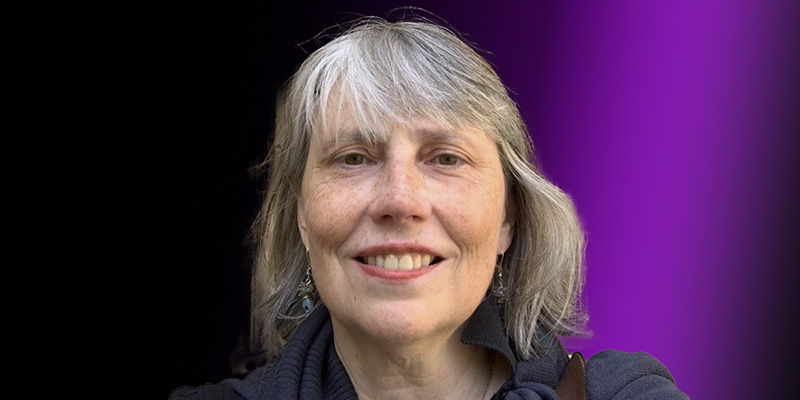
Rachel Barney est professeure de lettres classiques et de philosophie. Elle a fait ses études de premier cycle à l'Université de Toronto, où elle est revenue après avoir obtenu un doctorat à Princeton et enseigné à l'Université d'Ottawa, à Harvard et à l'Université de Chicago. Ses recherches portent sur les premiers sophistes jusqu'au commentateur néoplatonicien Simplicius, mais se concentrent principalement sur Platon. Elle s'intéresse particulièrement aux domaines où se rejoignent les questions d'éthique, de psychologie, d'épistémologie et de méthode philosophique, comme dans la théorie du bien de Platon.